Hendrik van Rijgersma: The Doctor Who Documented Nineteenth-Century St. Maarten
Documenting St. Maarten & St. Martin Nature
In the nineteenth century, St. Maarten / St. Martin was a small Caribbean island shaped by trade, agriculture, salt production and the transition from slavery to a new social order. During this period, one man recorded the island’s natural world with unusual precision. Hendrik Elingsz van Rijgersma arrived on St. Maarten in 1863 as a government physician. He would spend the final fourteen years of his life there as a doctor, naturalist, collector and illustrator.
Van Rijgersma was born on 5 January 1835 in Lemmer, Friesland, in the Netherlands. He trained as a physician and developed an interest in natural history at an early age. Medicine and science were closely connected in the nineteenth century. Doctors were often among the first people to study unfamiliar environments because their work brought them into contact with landscapes, plants, animals and local communities.
In 1863, the Dutch colonial government appointed Van Rijgersma as the official physician of St. Maarten. His arrival coincided with one of the most important moments in the island’s history. Slavery had been abolished in the Dutch Caribbean that same year, and the colonial administration faced the challenge of providing medical care and government services to a changing population.
Van Rijgersma settled in Philipsburg and became responsible for the health of the island’s inhabitants. His medical work brought him across St. Maarten. He travelled between communities and plantations, treating illnesses and injuries at a time when medical resources were limited. Tropical diseases, infections and accidents were common. His position as a doctor gave him a unique view of island life and allowed him to explore areas that few scientists had studied.
Studying St. Maarten / St. Martin Specimens
Outside his medical duties, Van Rijgersma devoted much of his time to observing the natural environment. He collected specimens throughout St. Maarten and became one of the first people to systematically document the island’s biodiversity. He studied shells along the coastline, examined plants in the hills, collected insects and reptiles, and preserved examples of marine life from the surrounding waters.
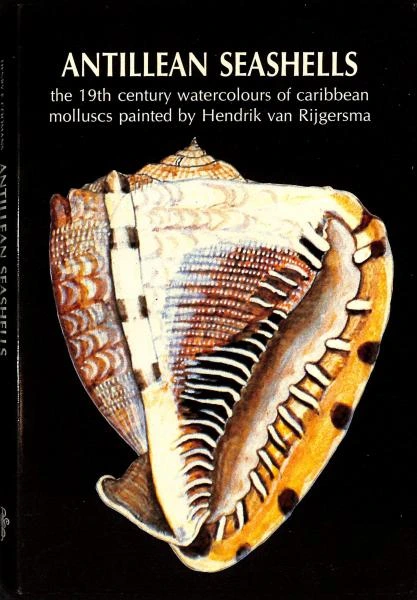
His greatest scientific interest was the study of shells. During the nineteenth century, shell collecting was an important part of natural history. Scientists used shells to identify species and understand the diversity of marine environments. Van Rijgersma gathered large collections of Caribbean mollusks and carefully documented their characteristics. Many of these specimens were later preserved in European and American scientific collections.
Van Rijgersma was also an accomplished illustrator. Before modern photography became widely available, drawings were essential tools for scientific research. His watercolours recorded the appearance of plants, animals and shells in remarkable detail. His illustrations combined artistic ability with scientific observation and provided valuable records of species found on St. Maarten during the nineteenth century.
His botanical studies created an important historical record of the island’s vegetation. Some plants he documented have since become rare or disappeared from parts of St. Maarten because of development and environmental change. His work preserved information about ecosystems that no longer exist in the same form.
Van Rijgersma also made important contributions to the study of Caribbean animals. He collected reptiles, birds, insects and fish. A species of Caribbean racer snake was later named in his honour, Alsophis rijgersmaei, recognizing his contribution to natural history. His collections also included fossils that helped scientists understand the ancient environments of the Caribbean islands.
A St. Maarten Supermouse?
Among his fossil discoveries were remains of the extinct giant hutia, a large rodent that once lived on islands including St. Maarten and Anguilla. These findings showed that the Caribbean had a much older and more complex natural history than was visible from the living species of the nineteenth century.
Although Van Rijgersma published relatively little scientific writing, his collections became his lasting scientific contribution. He sent specimens to institutions and researchers abroad, where they were studied and preserved. His work connected a small Caribbean island with the wider scientific community of the nineteenth century.
Life on St. Maarten was not easy during Van Rijgersma’s time. Travel across the island was difficult, scientific equipment was limited, and medical responsibilities demanded much of his attention. Despite these challenges, he continued collecting and documenting the natural world around him. His research was carried out during daily walks, medical journeys and expeditions through the island’s coastal and inland areas.
Van Rijgersma died on St. Maarten on 4 March 1877 at the age of 42. He left behind medical records, scientific collections and hundreds of observations about the island’s environment. His grave is located at the historic Cul de Sac Cemetery, where John Philips also found his final resting place.
More than a century after his death, Van Rijgersma’s drawings and studies are still kept and cited in European and American universities and museums. Books with his work are still sold and used by students till date, providing a window into the island before major modern changes transformed its landscape.
Back to VISIT St Maarten / St Martin Main Page