
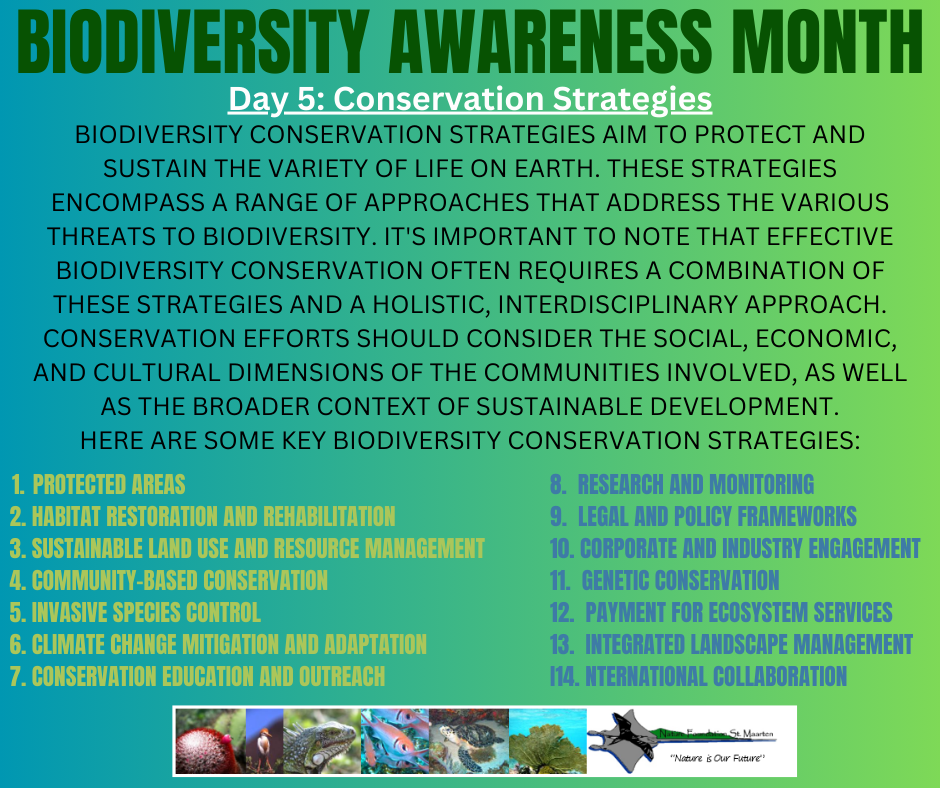
Biodiversity month day 5: Conservation strategies
Biodiversity conservation strategies aim to protect and sustain the variety of life on Earth. These strategies encompass a range of approaches that address the various threats to biodiversity. Here are some key biodiversity conservation strategies:
The St. Maarten Hospitality & Trade Association supports the March Biodiversity awareness month organized by the Nature Foundation in an effort to help protect St. Maartens nature and biodiversity. Todays topic: Conservation strategies
1. Protected Areas:
– Establish and maintain protected areas, such as national parks, wildlife reserves, and marine protected areas, to provide safe havens for diverse species and ecosystems.
2. Habitat Restoration and Rehabilitation:
– Restore degraded habitats through reforestation, wetland restoration, and other efforts to improve the health and functionality of ecosystems.
3. Sustainable Land Use and Resource Management:
– Promote sustainable agricultural practices that minimize habitat destruction and reduce the use of harmful chemicals.
4. Community-Based Conservation:
– Involve local communities in conservation efforts, recognizing their role as stewards of natural resources and incorporating traditional ecological knowledge.
5. Invasive Species Control:
– Implement measures to control and manage invasive species that threaten native biodiversity.
6. Climate Change Mitigation and Adaptation:
– Support initiatives to reduce greenhouse gas emissions and mitigate climate change impacts.
– Implement strategies to help species and ecosystems adapt to changing climate conditions.
7. Conservation Education and Outreach:
– Raise awareness about the importance of biodiversity and promote environmental education to foster a greater understanding of conservation issues.
8. Research and Monitoring:
– Conduct scientific research to better understand ecosystems, species, and the impacts of human activities.
– Establish monitoring programs to track changes in biodiversity and assess the effectiveness of conservation measures.
9. Legal and Policy Frameworks:
– Enact and enforce laws and policies that protect biodiversity and regulate activities that may harm ecosystems or species.
– Encourage international cooperation to address global conservation challenges.
10. Corporate and Industry Engagement:
– Encourage businesses and industries to adopt sustainable practices, reduce environmental impacts, and contribute to conservation efforts.
11. Genetic Conservation:
– Establish seed banks, gene banks, and other repositories to conserve genetic diversity within plant and animal species.
12. Payment for Ecosystem Services (PES):
– Implement programs that incentivize the conservation of ecosystems by providing financial rewards to communities or individuals for maintaining ecological services.
13. Integrated Landscape Management:
– Adopt landscape-level approaches that consider the connectivity of habitats, ensuring the conservation of biodiversity beyond individual protected areas.
14. International Collaboration:
– Foster collaboration among countries to address transboundary conservation issues, such as migratory species and shared ecosystems.
It’s important to note that effective biodiversity conservation often requires a combination of these strategies and a holistic, interdisciplinary approach. Conservation efforts should consider the social, economic, and cultural dimensions of the communities involved, as well as the broader context of sustainable development.